Info Page Glow Engines A to K Glow Engines L to O Glow Engines P to Z Spark Ignition Engines Diesel Engines Jet Engines Engine Spares Steam Engines | |
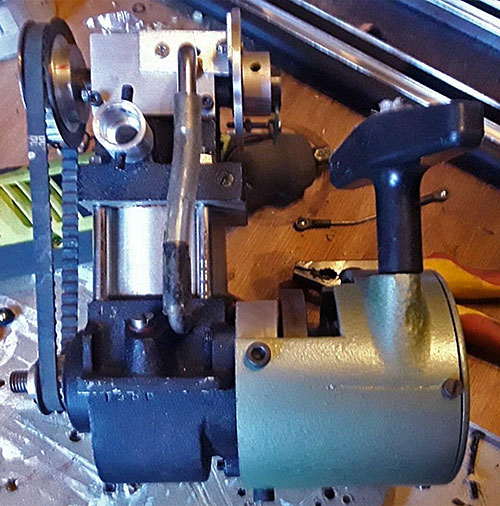
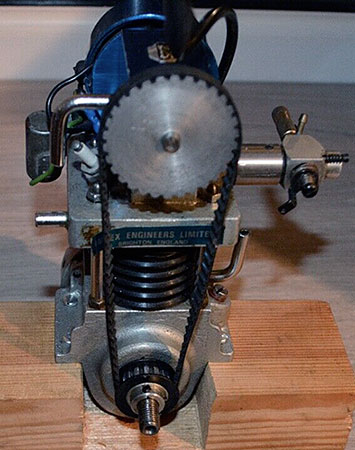
Adcolantic The Adcolantic range of over head camshaft marine engines were manufactured by Impex Ltd. Brighton, England, during the 1970's, capacity 30cc. | |
| Adcolantic (Impex) 30cc Water Cooled mid 1970's Cost £140 Fuel: Petrol |
| Adcolantic (Impex) 30cc Water Cooled
mid 1970's Cost £96 With 4 spare cam-belts Fuel: Petrol |
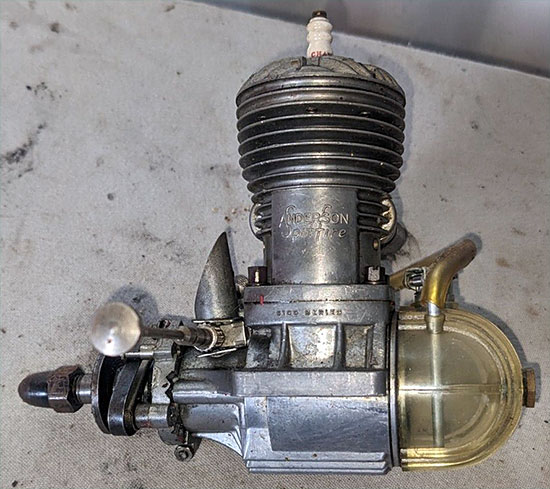
Anderson, Mel Mfg Co. The Anderson, Mel Mfg Co. Was Formed by Mel Anderson in Los Angles, CA USA during 1946, initially producing the thunderbolt engine, which in February 1948 was re-launched as the Anderson Spitfire 0.60 cu in engine. In July 1948 the capacity of the Spitfire was increased to 0.65 cu in and glow plug and R/C versions were also introduced and a blue "Denver" high compression head available for elevated altitudes. Although the Spitfire was a beautifully designed and manufactured engine its consequential high price (twice that of the competition) severally limited sales, it was the 0.45 cu. in. Baby Spitfire which was to sell in unprecedented numbers (over 500,000), it was originally conceived as a promotional gift for a newspaper’s new subscribers but introduced in 1949 for general sale. The last Anderson, Mel Mfg Co. engine was the 0.49 Royal Baby Spitfire of late 1952, made for approximately one year. The Anderson, Mel Mfg Co. Was dissolved in late 1953 following a disastrous large investment in a fuel manufacturing plant. Mel Anderson then agreed to design the Veco 100 series for Gil Henry who wanted to sell his own engine range to supplement his "Veco" range of model kits and parts, these became commercially available in 1956. Once the series 100 Veco engine range had been completed Mel undertook design work for Cox, including the Cox Conquest engine which was Mel’s last production engine design. | |
| Anderson Spitfire 0.65 cu in (1948) Cost: £103 Capacity: 0.650 cu in (10.95 cc) |
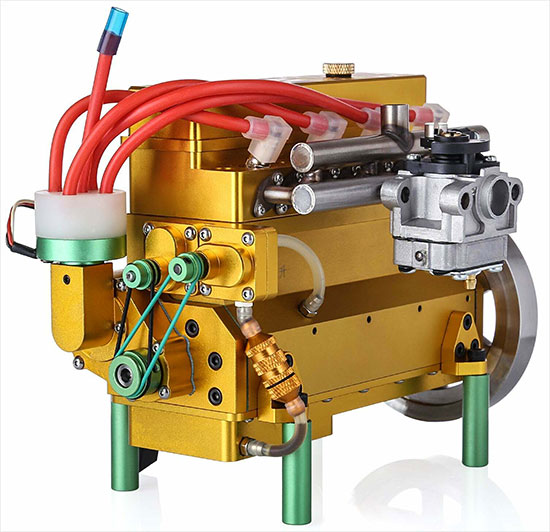
Baxter Baxter Engines were made in China from about 2020 | |
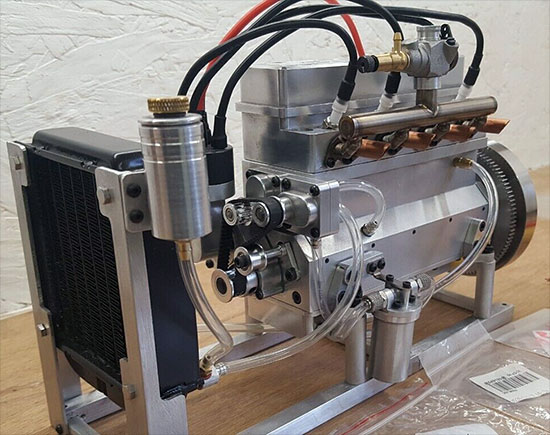
| Baxter GN-N100 32cc Four-Cylinder Water-Cooled Engine (2020) Cost £512 |
| |
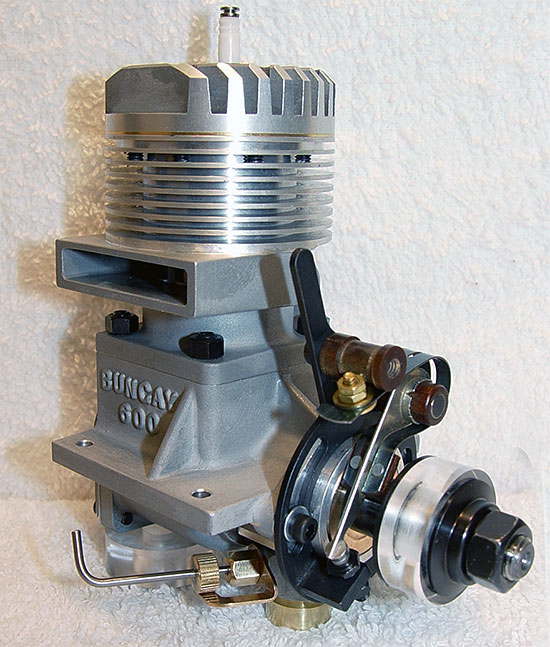
Bungay Bungay High Speed 600 engines were made by Bungay Brothers, New York, USA during 1948. | |
| Bungay High Speed 600 (1948-1949) Cost £450 Capacity: 0.607 cu in (9.951 cc) Piston/Liner: hardened steel liner with twin steel rings and an aluminium piston. |
CMB CMB engines have been produced by the workshop of Camillio Braghieri in Milan, Italy, since 1979. They specialise in high performance racing engines, predominantly marine. | |
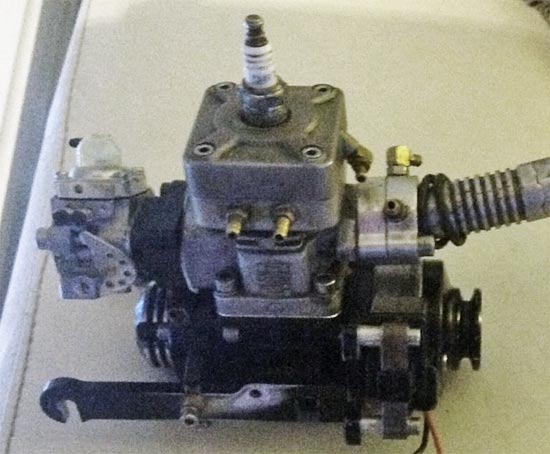
| CMB 26cc Spark Ignition Gasoline Engine (2009 to 2011) CMB 26 26cc gas engine with water-cooled header pipe and mounts for 5" rails. Fitted with pull-start & starter pulley Cost £380 s/h from Dave Marles 26cc spark ignition gasoline marine engine, ringed piston with removable chromed brass Liner, separate cylinder and head, piston port induction, Walbro 257 big bore carburettor, steel con-rod with twin needle bearings. The 26 cc spark ignition gasoline marine engine features a ringed piston with removable chromed brass Liner, separate cylinder and head, piston port induction with large transfer and boost ports, Walbro 257 big bore carburettor, steel conrod with twin needle bearings and recoil pull starter, round exhaust port outlet with Zenoah exhaust bolt spacing. Displacement: 26.0 cc |
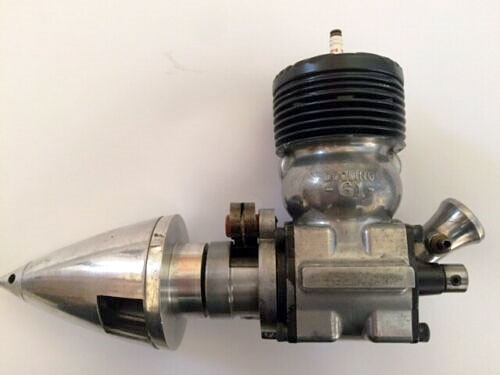
Dooling The three Dooling brothers, Russell, Harris and Tom, started Dooling Bros. in Los Angeles USA 1938 producing tethered car kits. Once WW2 ended they started engine design work and in 1947 started production of the famous Spark ignition Dooling 61 racing engine. Russell did most the design work with Harris leading the actual engineering production, Tom was the public face of the company entering and wining car races and being the one who drove sales. As supplied was an excellent engine but if tuned to the limit tended to have crankcase failures, in 1955 the AMCRA asked Bruce Underwood to design a replacement crankcase and the famous Yellow Jacket Dooling was born. With the invention of the glow plug the brothers added the Dooling 29 glow plug engine to their range in 1949 which was another immediate racing success. | |
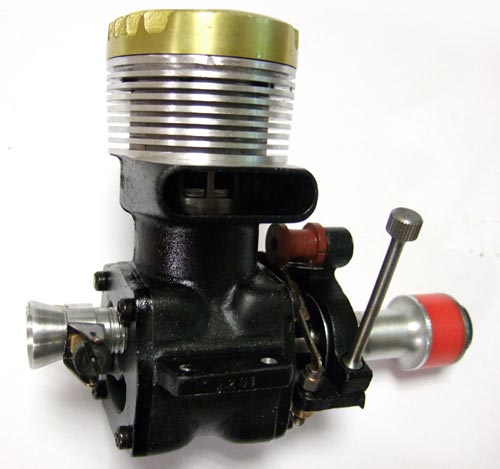
| DOOLING-61 7 FIN (1948) Cost £315 Capacity: 0.607 cu in |
Evolution Made for Horizon Hobby, inc. since 2004 by Sanye’s aerospace workshops in China as a State subsidised sideline, production ceased in 2019. | |
| Evolution 10GX Petrol Cost £74 Capacity 0.59 cu in (9.83cc) |
Fleetwind Fleetwind engines were made in the years immediately following WW2 by HOOF Products Co, Chicago, Illinois, USA. | |
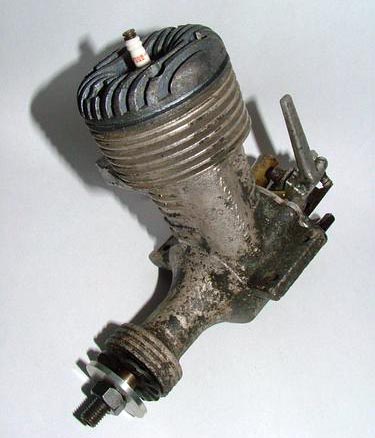
| Fleetwind E-60 Spark Ignition (1946) Cost £90 Capacity: 0.604 cu in Fuel: 20 to 25% castor oil remainder methanol |
FORSTER FORSTER engines were produced from 1936 by Forester Bros. of Lanark, Illinois, U.S.A. | |
| FORSTER F-29 (1952) Cost £35 Bronze crankshaft bearing |
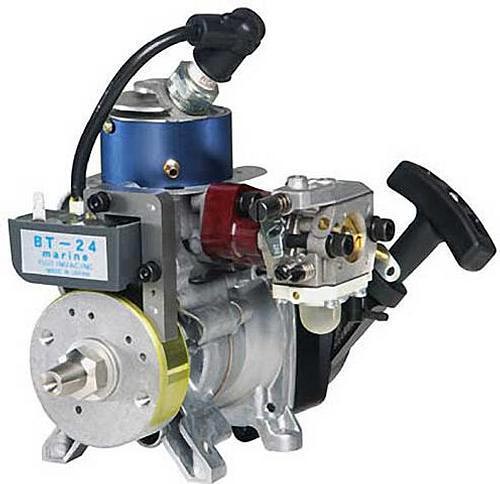
Fuji FUJI Engines are manufactured by FUJI-IMVAC INC. Yokohama, Japan | |
| Fuji Imvac BT-24 Cost £120 new |
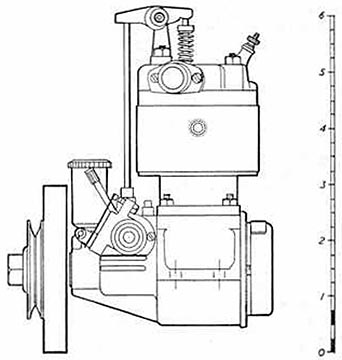
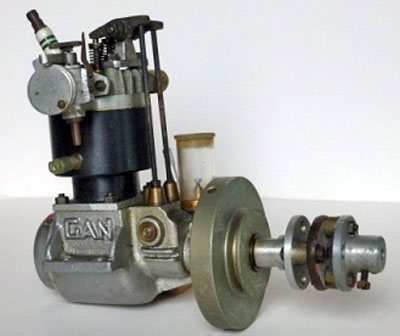
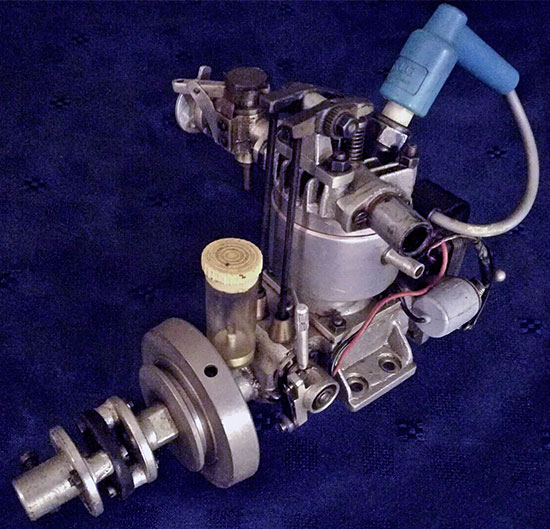
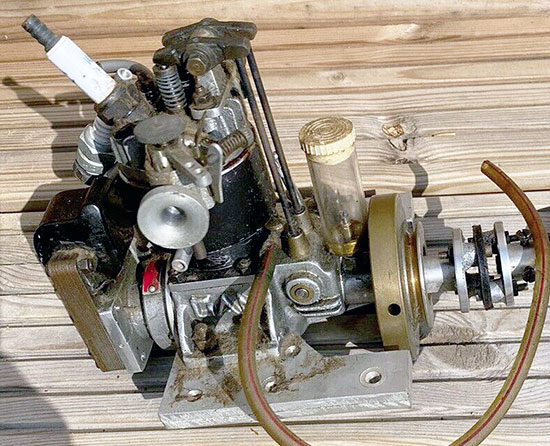
Gannet Gannet engines were produced from 1958 until 1971, they were designed by G A Nurthen and initially made by Nurthen & Muirhead Engineering of 200 Belsize Road, Kilburn, London. Within months production was transferred to Gannet Engineering Ltd of 7 Reevs Yard, Whitstable, Kent. | |
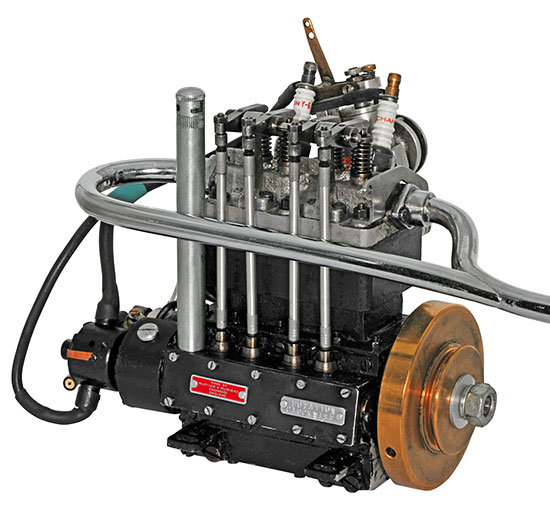
| Gannet 15cc OHV Engine Engine number is stamped as 352, which sits above a number 2. The Gannet was developed between 1954 and 1958, it was an expensive hand made engine (£26.00 in 1958) and was sold via Ripmax. There is no valve bounce up to 10,000 rpm. Tick over mixture is controlled by a large knurled brass disk on the carb. Capacity: 14.98cc |
The Gannet boasts High tensile (60 ton) valves with 1/8" stems and 3/8" heads - Phosphor bronze valve seats - Hardened steel pushrods - Valve gears are steel and Phosphor bronze - cams and rockers are case hardened mild steel - Inlet timing is 20 degrees before TDC to 60 degrees after BTC - Exhaust timing is 20 degrees before BDC to 20 degrees after TDC - Crankshaft runs in a ballrace and a Phosphor bronze bush - 5/16 BSF coupling thread - 3" diameter colleted brass flywheel weighing 16 oz and nickel plated - steel on later models - DTD 424 crankcase and alloy piston with two cast irin piston rings - Hardened steel gudgeon pin with brass end pads - Alloy con-rod with 3/8" Phosphor bronze big end bearing - Meehanite wet liner - Contact breaker is operated by a cam grub screwed to the camshaft - Spark Plug 3/8" 24tpi or 10mm on later models - Dry sump with all oil combing from the oil tube which lasts 10 to 15 minutes - Props should be 2 3/4" to 3" and pitch 3" to 3.5" | |
| Gannet 15cc MarineCost £301 1950's Gannet 15cc marine petrol engine number 3282 Capacity: 14.98cc |
| Gannet 15cc Marine with magneto Cost £307 Capacity: 14.98cc |
| Gannet 15cc Marine with magneto Cost £300 Capacity: 14.98cc |
| GANNET 30cc 2 cylinder Cost £2000.00 Capacity: 14.98cc |
Grayson E. Gray & Sons produced several model engines and engine casting kits pre WW2. Like several other engine manufactures in pre WW2 Britain any published engine design was considered fair game to produce as they had effectively entered the public domain, the following engines all fall into this category. It is quite probable none of these engines designers ever received any payment from E. Gray & Sons who sold numerous examples of their designs. | |
| Grayson 30cc - 1938 Cost: £250 Capacity: 29.79 cc (1.818 cu in) |
| HobbyKing | |
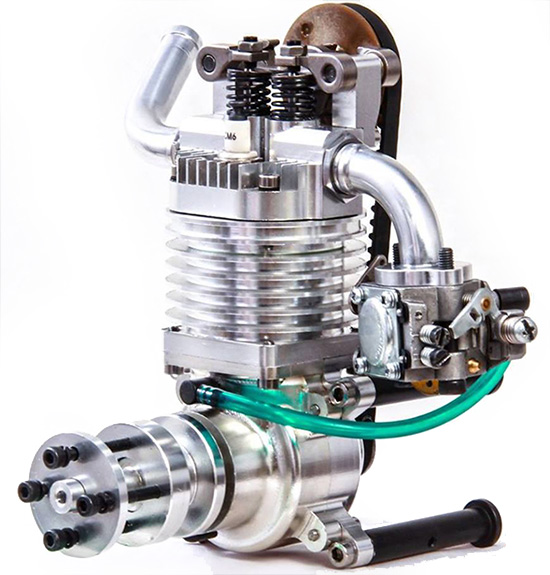 | HobbyKing A38 OHC Cost £140 - new £475 |
Jensen The Channel Island Special 10 cc OHV engine was designed by Edgar T Westbury and manufactured by J&G Jensen Ltd. in Jersey, one of the UK's Channel Islands. Introduced in the latter part of 1949 the engine was too expensive @ £7 11s 3d for the immediate post war era, in consequence manufacture ceased around 1953 by which time the purchase cost had risen to £12 and it is rumoured the manufacturing jigs were cast into the sea, the last complete engines were sold in 1955 by Octura Products in the US although plans and castings were still available until the early 1960's. It is believed only a couple of hundred complete engines were made by Jensen but an unknown number from their kits and castings (a part machined kit halved the cost and castings only halving it yet again). | |
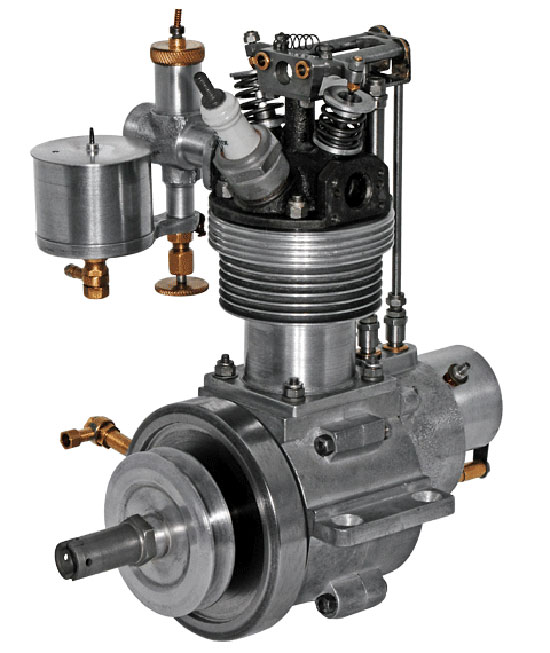
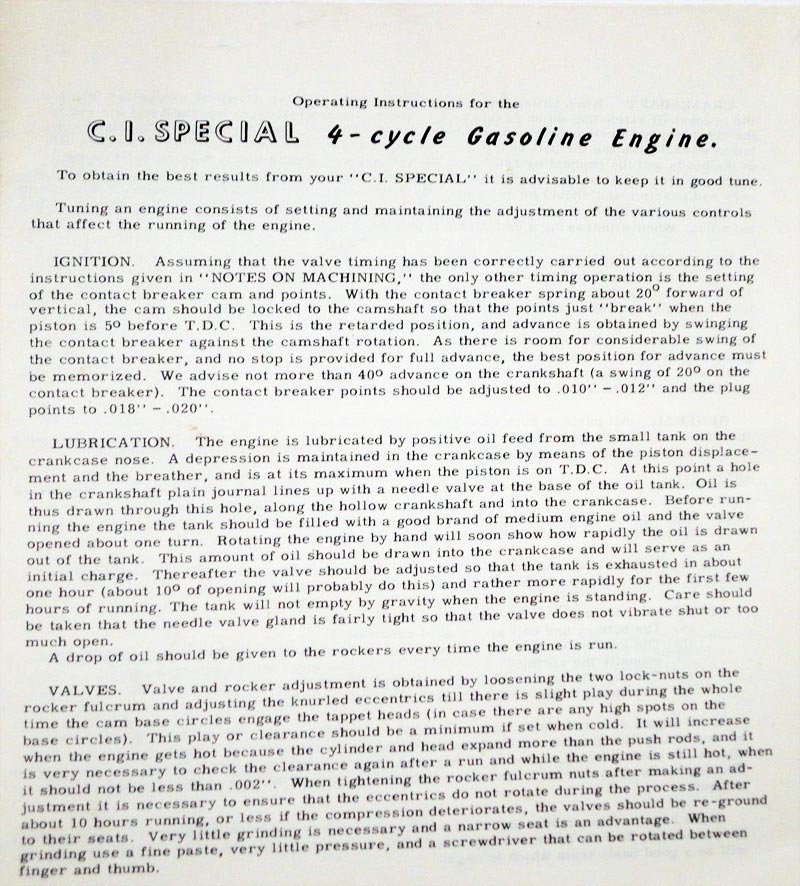
| Channel Island Special (1949-1953) It is believed only a couple of hundred complete engines were made by Jensen but an unknown number from their kits and castings (a part machined kit halved the cost and castings only halving it yet again). Capacity: 0.604 cuin (9.9cc) This example appears to have been constructed from a part machined kit, the timing adjuster mechanism and cylinder head having been made specifically for marine use (the exhaust outlet and carburettor are swept towards the flywheel rather than the rear of the engine as they normally would be). Cost £400. Instructions |
| JEN JEN engines were made in China for Just Engines between 2004 and 2013, the range consisted of a 37, 47, 57 and 91. All the engines featured a distinctive black crankcase and mauve cylinder head. | |
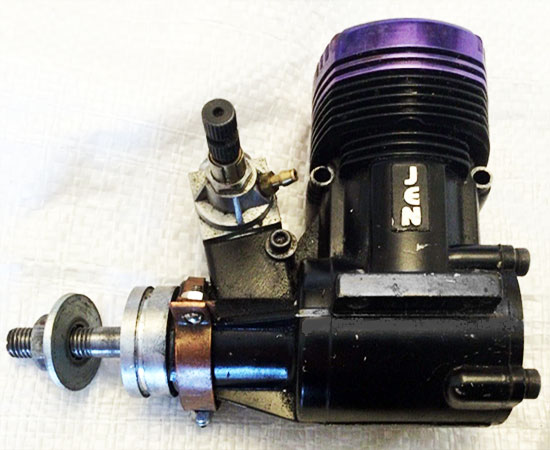 | JEN 91AR Mk2 ( 2005 - 2013) Cost £27 Power: 2.8 BHP @ 15,000 RPM Includes conversion kit for petrol/oil mix |
| MOKI MOKI (Model Engine Institute) engines are made by Moki-Modell in Budapest, Hungary. They were formed by the Hungarian ministry of defence to make engines for military and training purposes. MOKI engines only became available internationally in 1989 following political change in Hungary. MOKI Petrol engines are distributed in the UK by Stuart Mackay Models. | |
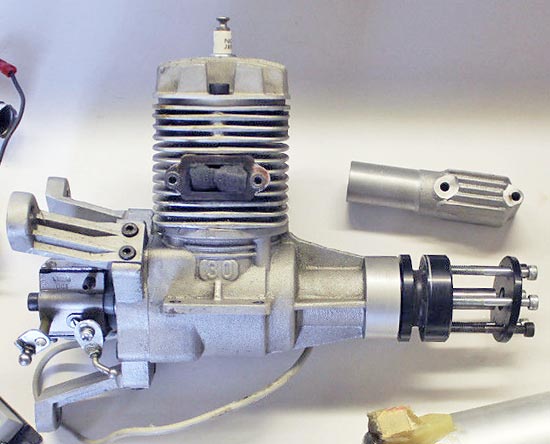 | MOKI 30 HD (2014) Cost £120 came with a spares engine, new £435 |
MATHE Mathe engines have been produced by Officine Meccaniche Mangiacavalli & C. Snc. Located in Lomazzo (CO) - Italy since 1981. Their engine range have include those for aircraft, 1/4 scale cars and marine. Mathe Competition 30cc (5.5 bhp @ 13,500), Mathe 35cc competition (6.5 bhp @ 14,500 rpm), Mathe 35cc supercompetition VHP (9.5 bhp @ 19,000 rpm). | |
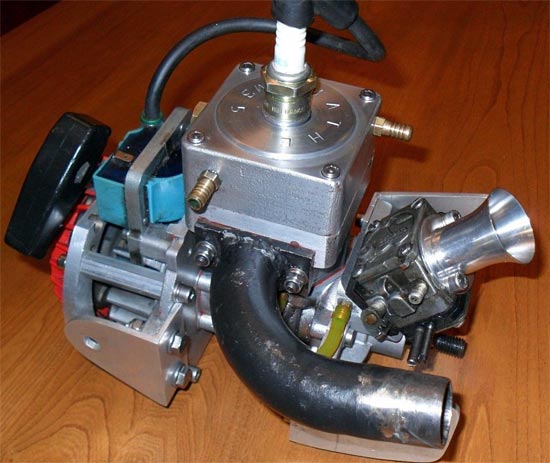
| MATHE 35 COMPETITION Cost £360 Four transfer ports and rotary disk induction Capacity: 14.98cc |
| MATHE 35 COMPETITION Four transfer ports and rotary disk induction Fuel: Petrol/two stroke oil |
McCoy Early McCoy engines were Designed by Dick McCoy and produced by the Duro-Matic Company in Hollywood, USA, later engines by their subsidiary Testor Corporation in Los Angeles, California, USA. | |
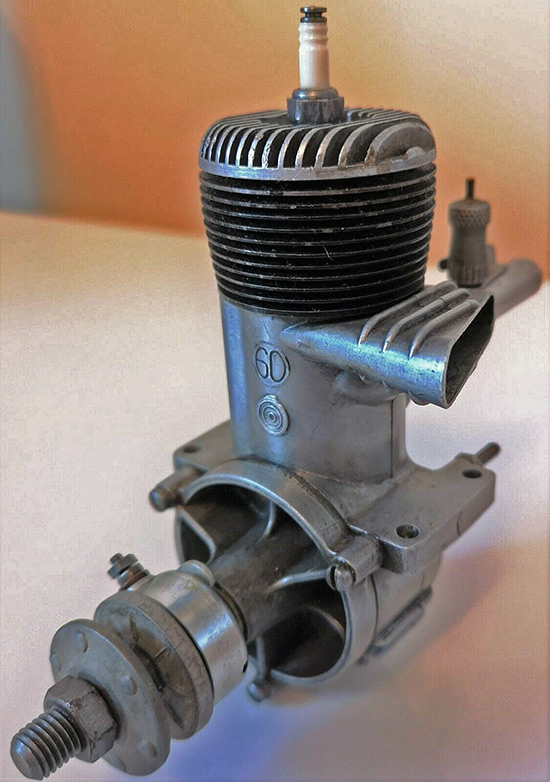
| McCoy 60 (1947) Duromatic made Gold (red) Head cost £140 Capacity: 9.95 cc ( 0.607 cu in ) Fuel: 20 to 25% castor oil remainder methanol |
Mechanair Mechanair Ltd. of Birmingham, Warwickshire, England, made model spark ignition side-port aero engines between 1946 and 1947, they were marketed under the names Astral and Mechanair and of 5.9cc. Astral Aero Model Co. Credited the design and production of the Astral engine to Mechanair Ltd. | |
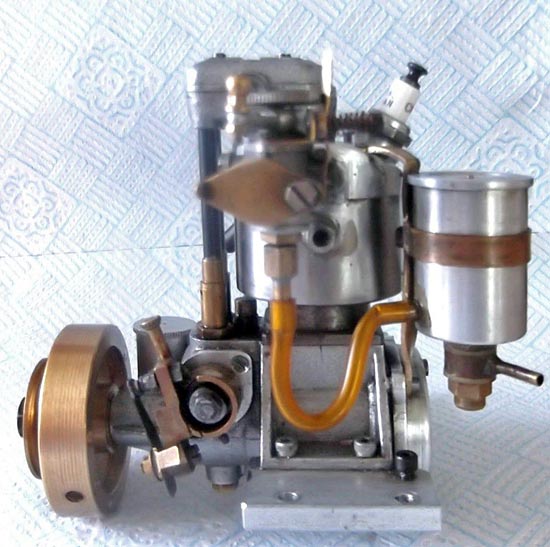
| Mechanair 5.9cc Red Head Spark Ignition Engine (1947) Cost: £60 |
Merco The first production MERCO engines, the 29 and 35 were made in 1959, designed by Ron Checksfield and produced by the Model Engine Research Co. Ltd., from which the band name MERCO is derived. In 1961 just as the prototype MERCO 49 had been completed the company was sold to D.J. Allen Engineering Limited (AM engine manufactures) based in Edmonton, London, UK. The MERCO 49 went into production in 1962 with the 61 entering production in 1964. It must be noted that the Merco 29, 35, 49 and 61 were all designed and developed by Ron Checksfield who had been a joint founder of Model Engine Research Co. Ltd and had become an employee of D.J. Allen Engineering following the change of ownership. In the late 1970’s D.J. Allen Engineering Limited engine interests were sold to an engineering company called Ferraris. A final change of own a ship occurred in 1983 when Forest sold his AM and Merco ingests to one of their employees, Reg Hills who produced the range under the name of Forest Engineering. It was Reg Hills who to a limited degree tested ABC piston/cylinder technology, the AM diesels were also kept in production. Ron Hills was only ever able to break even financially so sold the engine business to Premier, they traded as Premier Engines with production taking place at Southminster in Essex. Premier introduced the Merco 30 and 40 with black crankcases as well as ABN piston/liner technology, unfortunately it was too little too late. | |
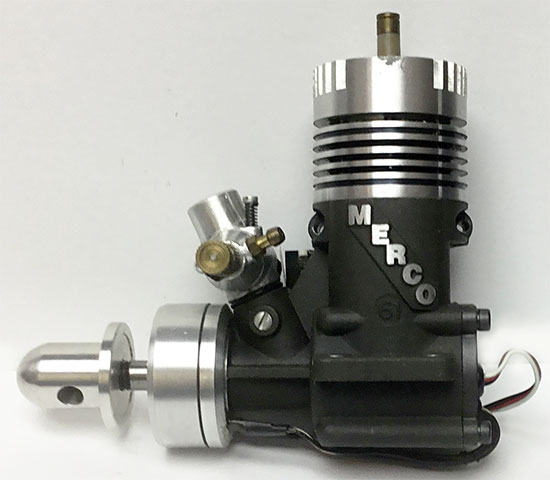
| Merco 61 Spark Ignition New The last production versions of the Merco 61 featured a black crankcase and were produced by Premier Plastics in the nineties. Most unusual for this time period they produced a petrol spark ignition version of the Merco 61, it utilised a custom made spark plug and twin Hall effect sensors for the electronic ignition, one with advanced timing for starting and the other one retarded for running. Fuel: Petrol/two stroke oil
|
NGH NGH engines are produced by Changsha Guanghua Aviation Technology Co.,Ltd. located in the Technological Development Zone, Changsha City, Hunan Province, China. The company was Founded in September 2010 and specialises on the design and production of model aircraft piston engines and UAV piston engines. | |
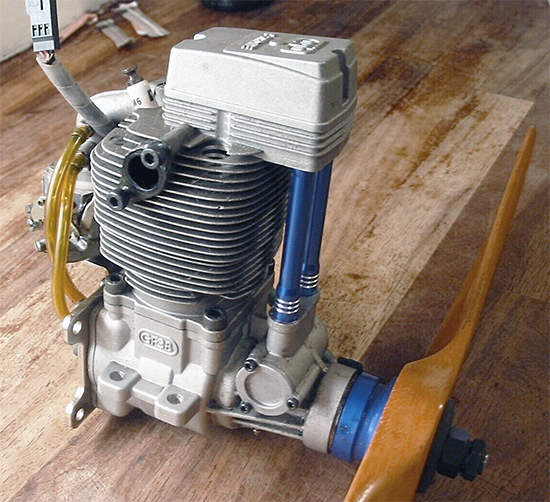
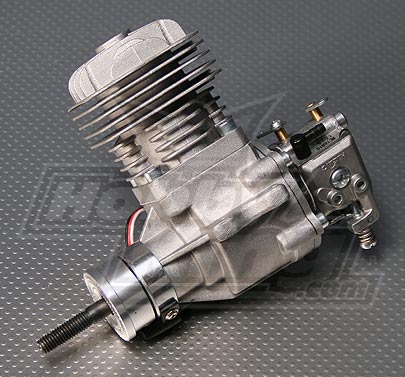
| NGH GF38 Four Stroke Petrol Engine (2012 - on) Cost: £131 Capacity: 37.97cc Walbro WT1022 carb, RcXEL ignition, twin roller CNC conrod, twin ringed piston. A front mounted camshaft is driven by a helical gear off the crankshaft and operates twin overhead valves by push rods. The Walbro carbs diaphragm pump is operated by pressure pulses from the crankcase. There are two Tygon tubes connected to the rear of the crankcase, one operates the Walbro WT1022 carburettor diaphragm pump, the other recycles excess crankcase oil into the inlet manifold. A third connection, between the main bearings allows some excess oil to vent externally to ensure oil can circulate through the crankshaft bearings and camshaft. |
OS OS introduced its first model engine in 1936 making it the oldest model engine manufacturer in the world to still be producing engines today. OS engines are made by Ogawa Model Manufacturing Co. Ltd., located in Osaka, Japan. Engine history | |
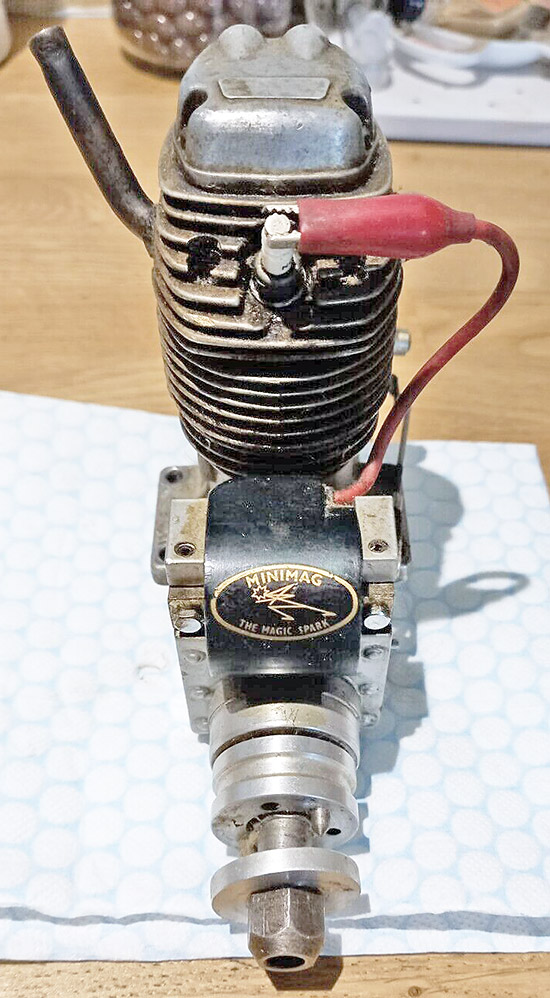
| OS FS-80 RC with mini-mag (1982) Cost £108 Capacity: 2.96 cc |
O&R (Ohlsson & Rice) O&R engines were designed by Irwin Ohlsson, Harry Rice dealt with the production tooling, together they formed formed Ohlsson & Rice in early 1941, initially marketing 19, 23 and 60 capacity engines. In December 1941, the USA entered WW2 and O&R were repurposed to military production, by this time they had already produced 75,000 engines. After the war ended they returned to model engine production, within a year they were producing nearly 1,000 engines a day. From 1946 to 1959 when O&R ceased trading, they also produced 23 and 29 powered midget round the pole race cars which proved very popular. | |
| O&R 60 (1949) Cost £84
|
Pacemaker Pacemaker engines were developed by Bill Siedler and produced by Capitol Mfg Co. New York, USA, from 1946 to 1947 after which production was taken over by Gotham Hobby. Hobby. | |
| Pacemaker 59 mk2 The early Pacemaker 59 spark ignition engines produced in 1946 by Bill Siedler utilised magnesium crankcases. The engine has a hardened steel cylinder liner, a cast iron piston and commercial automotive points. Fuel: 20 to 25% castor oil remainder methanol |
RCG | |
| RCG 20cc Gas engine with CDI Cost £69 Displacement: 20cc |
RMCK RC Marine Korea (RCMK) was formed in 2001 by RC model boat makers dedicated to producing quality products and engines for racing RC power boats. | |
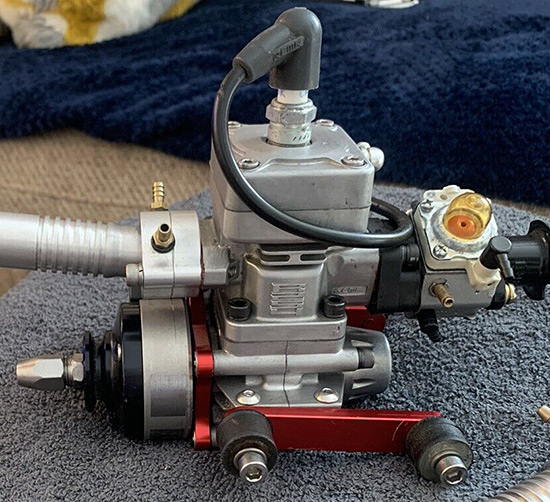
| RMCK 26cc Cost £90 Fuel: Petrol/two stroke oil |
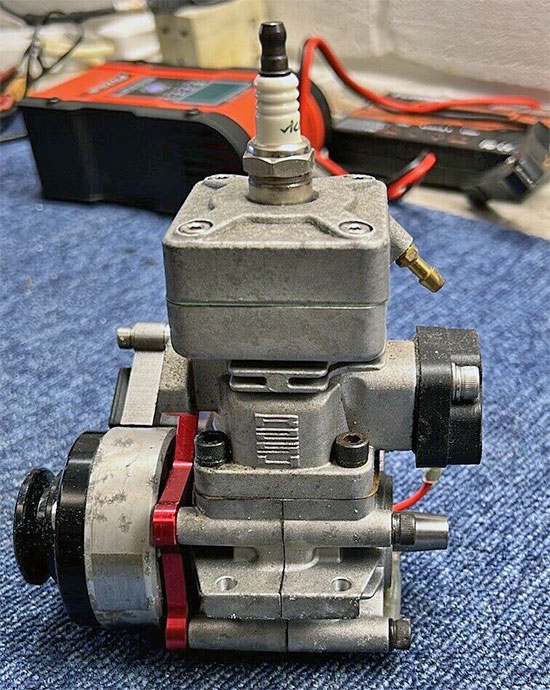
| RMCK 30cc Cost £133 K30 top end, Dave Marles big bore carb. Fuel: Petrol/two stroke oil |
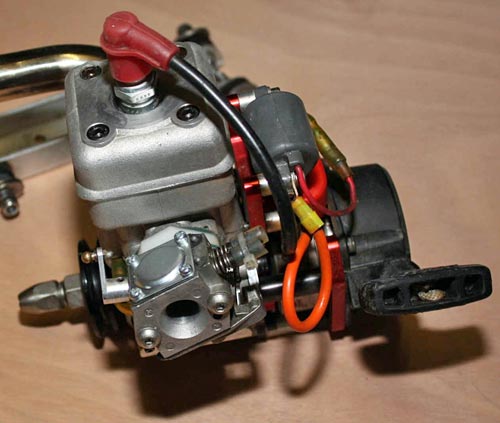
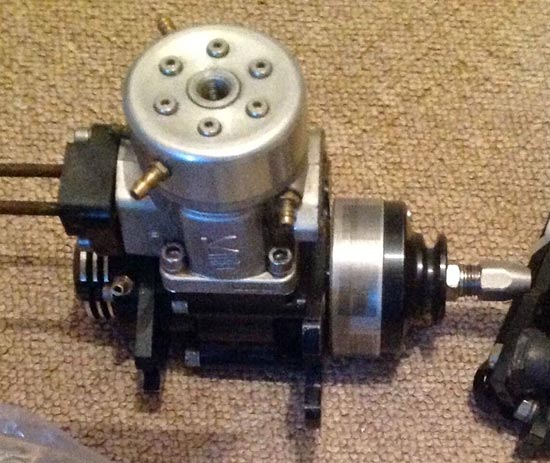
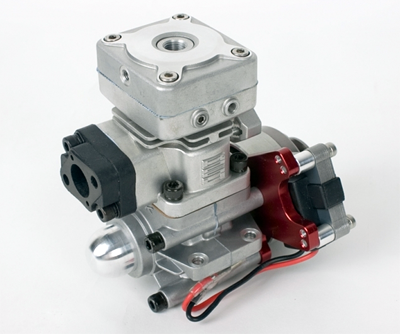
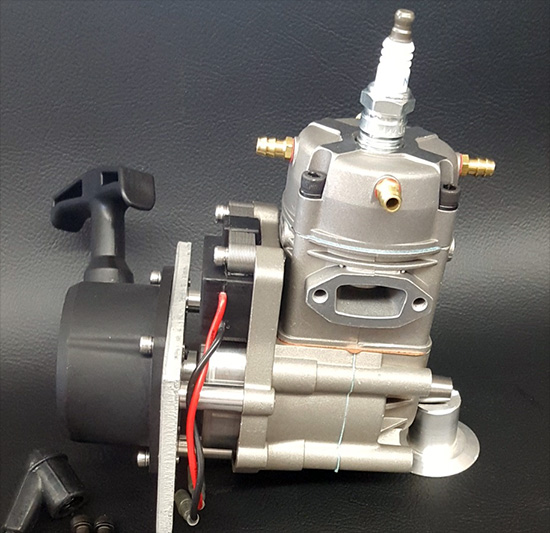
| RCMK R254 EVO (2009) Cost £99 New The 25.4cc R-254 EVO Rear Exhaust engine is a CNC produced engine with a vertically split cast alloy crankcase. The R-254 has a 4 bearing crankshaft and requires an electric starter to start. Power: 5HP+ Fuel: Petrol/two stroke oil |
| RCMK R254 EVO (2009) Cost £80 New The 25.4cc R-254 EVO Rear Exhaust engine is a CNC produced engine with a vertically split cast alloy crankcase. The R-254 has a 4 bearing crankshaft and requires an electric starter to start. Power: 5HP+ Fuel: Petrol/two stroke oil
|
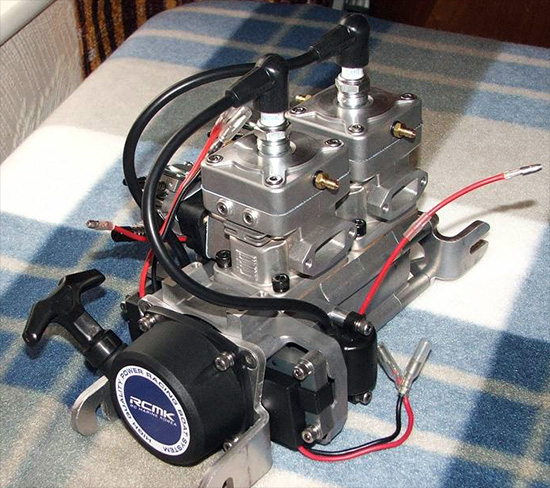
| RCMK R254 EVO (2009) Cost £173 The 25.4cc R-254 EVO Rear Exhaust engine is a CNC produced engine with a vertically split cast alloy crankcase. The R-254 has a 4 bearing crankshaft and requires an electric starter to start. The carb is a WT-929 which is very similar to the WT-257. Power: 5HP+ Fuel: Petrol/two stroke oil |
| RMCK S-520 EVO (2010) Capacity: 52cc Fuel: Petrol/two stroke oil |
ROTO ROTOmotor Ltd. is located in Hronov, Czech Republic. They produce petrol fuelled spark ignition engines from 25cc single cylinder two strokes, up to four-cylinder four-strokes of 170cc | |
| Roto 25v two stroke Roto 25v nw in original box with instructions - cost £209. Crankcase - Casting machined and powder coated. Cylinder - Dural with a pressed in mild-granular cast iron liner ground and honed to size. Piston - Cast from silicon alloy with single piston ring. Conrod - Forged, with two needle bearings. Crankshaft - Fully hardened, ground and balanced steel. Rear disk – hardened and ground. POWER:- 3.7PS |
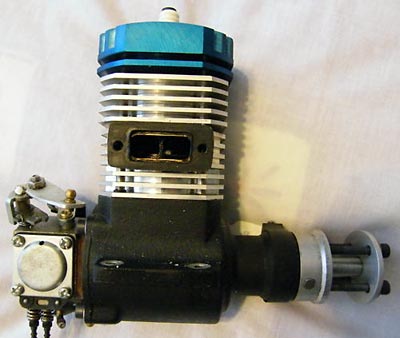
| Roto 25 Crankcase - Casting machined and powder coated. Cylinder - Dural with a pressed in mild-granular cast iron liner ground and honed to size. Piston - Cast from silicon alloy with single piston ring. Conrod - Forged, with two needle bearings. Crankshaft - Fully hardened, ground and balanced steel. Rear disk – hardened and ground. POWER:- 3.7PS |
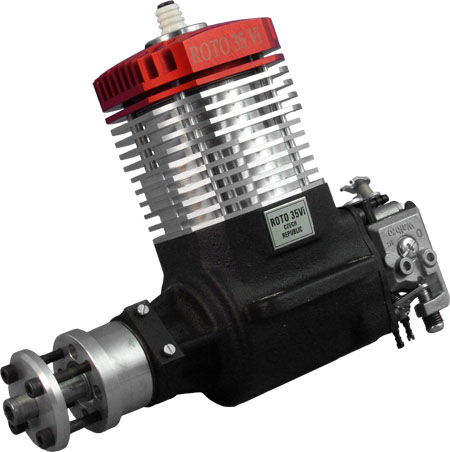
| Roto 35Vi Aircraft Petrol Engine Crankcase - Casting machined and powder coated. Cylinder - Dural with a pressed in mild-granular cast iron liner ground and honed to size. Piston - Cast from silicon alloy with single piston ring. Conrod - Forged, with two needle bearings. Crankshaft - Fully hardened, ground and balanced steel. Rear disk – hardened and ground. Cost £360.00 |
Syncro The Syncro B-30 engines were marketed by the Syncro Devices Company, USA from early 1941 until just after the USA joined WW2 in December 1941, but it is probable the actual production was undertaken in Philadelphia by the Judson Manufacturing Company. | |
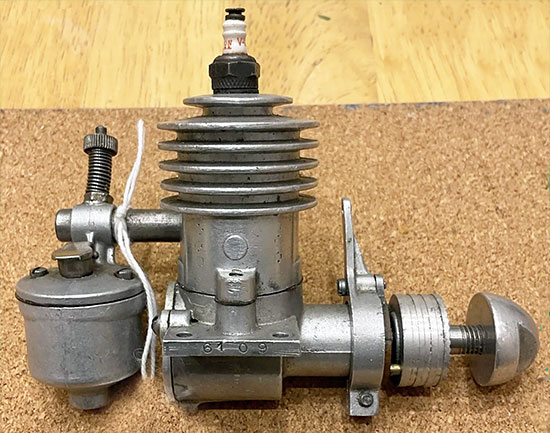
| Syncro B-30 0.29 class "B" spark ignition engine (1945) Cost: £45 The engine featured between one and three bronze piston rings fitted to an aluminium piston which ran in an aluminium bore, consequently the engine wore out very, very, quickly and is commonly referred to now by collectors as a "slag engine", although strictly speaking the term should be applied to post WW2 engines which did not even have piston rings. A cheaper version without rings, serial number and a stamped steel back plate was marketed as the Syncro PC-2 in kit form. |
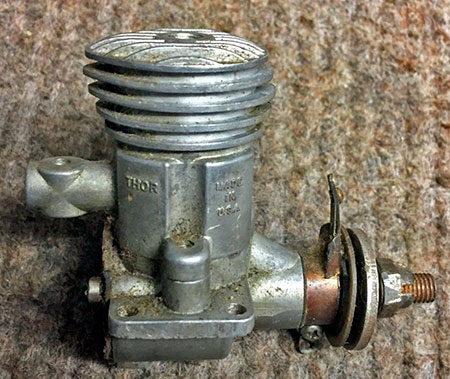
Thor Thor engines were produced from 1946 by Judson Co. in the USA just after the end of WW2. They were very cheap low quality engines with an estimated useful life of one or two hours, for this reason they are classed as part of the group of engines made by Judson Co. referred to as "Slag engines", They were marketed by America's Hobby Center Inc. New York and were aimed at youngsters just entering the hobby as a first engine. Late versions used a chromed piston that increased engine life a little. | |
| Thor B (1946) Cost £35 Capacity: 0.292 cu in (4.79 cc) |
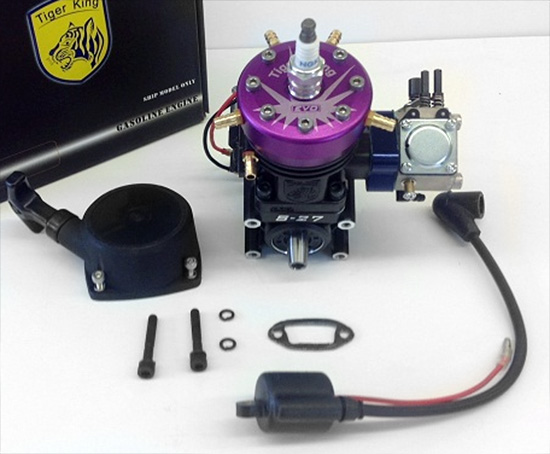
Tiger King Tiger King marine engines are manufactured by Tianjie a precision engineering company located in Foshan City, China. | |
| TIGER KING S27 (2014) New Full circle crankshaft with steel con-rod, meehanite liner, water-cooling around the cylinder and exhaust port, cast aluminium crankcase with 4 bearings, head insert, ceramic coating on the piston crown, lightweight flywheel, custom ignition source coil Capacity: 27cc |
| Tiger King S-26 Open Port (2019 2019) New Capacity: 25.967 cc (1.585 cu in) |
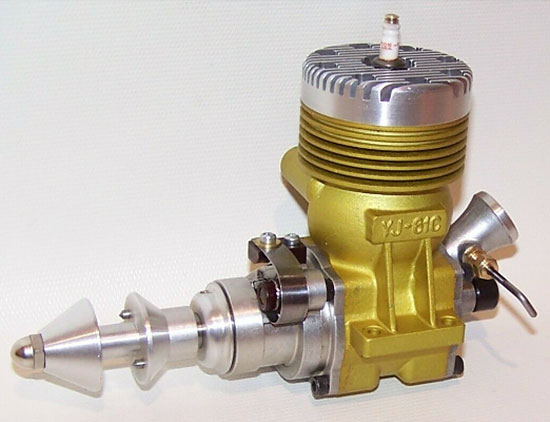
| Yellow Jacket (Dooling 61) The Dooling 61 proved to be a potent racing engine, however when highly tuned and using exotic fuels had a tendency for the crankcase crack at the base of the bulge bypass. The Doolings main and use was in tethered cars and in consequence in 5 the American Miniature Car Racing Association (AMCRA) approached Bruce Underwood with the problem and he made a new heavily reinforced crankcase anodised a golden yellow as an after-sale upgrade. When Dooling ceased production of the 61 he began producing the whole engine, it eventually evolved well beyond the original Dooling design, the last model was the 1972 "P" series glow plug engine. In total just over 1,000 complete yellow jacket engines were produced by Bruce Underwood. | |
| Yellow Jacket 61c Reproduction engine made in the Ukraine in small numbers for Woody Bartelt. Cost £500 |
Home Made Engines | |
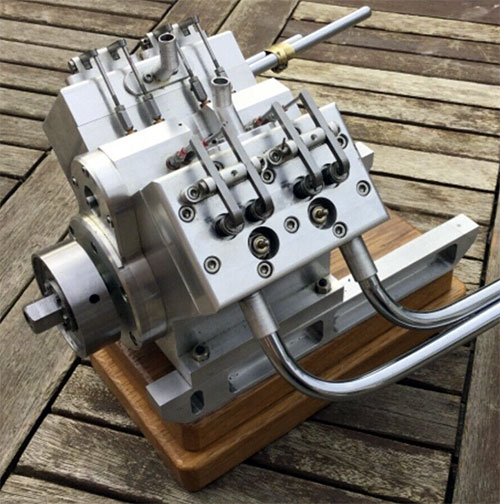
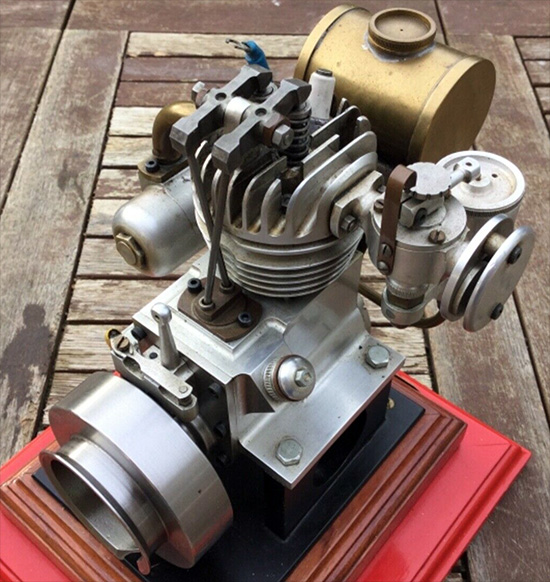
| V5 petrol engine Cost £1000 Stroke: 23 mm (0.905 in) |
| Home built 4 stroke Cost £625
|
Edgar T Westbury Designs | |
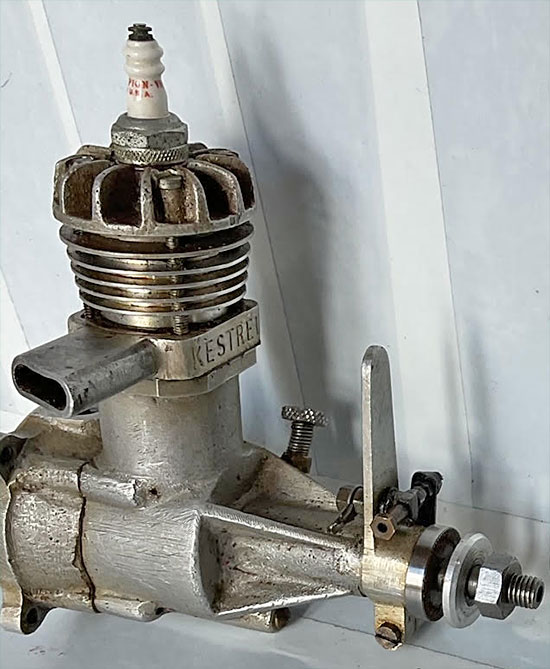
| Kestrel Cost: £60 |
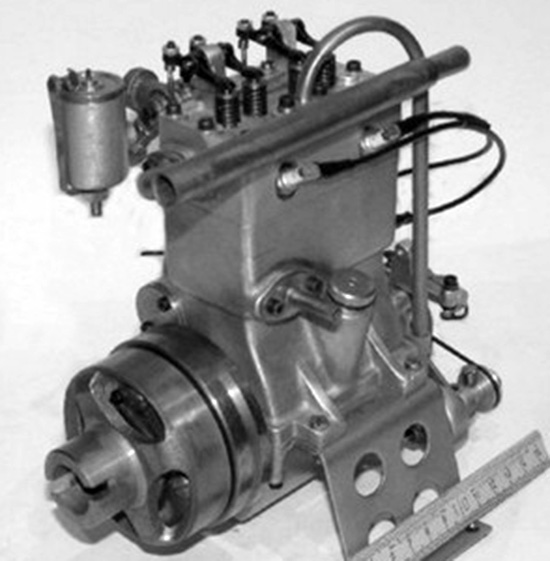
| 1831 (1941) Cost £650 Designed by designed by Edgar T Westbury in 1959 in 1941 to power a 3.5" gauge model train. It was referred to by the number 1831 which was the train it was designed for. This is the original engine with bronze castings and complex carburettor. It was redesigned in 1962 using aluminium castings and named the "Wallaby" It is a twin cylinder side valve engine fitted with a centrifugal clutch and starting handle. |